
Most people think a car looks “old” because the paint has faded.
They see a dull, hazy finish and assume the sun has simply done its worst over the last five years. So, they go to the local auto shop, grab a bottle of wax, spend a Sunday afternoon rubbing it on, and… nothing. It might look a bit shinier for forty-eight hours, but those scratches are still there. In fact, sometimes the wax makes them stand out even more.
That’s because the problem isn’t on top of the paint. It’s the surface itself.
At Ryan’s Mobile Car Detailing, we see this every day across South Eastern Melbourne. A client calls us up because their black Euro sedan looks “grey” in the sunlight. What they’re seeing isn’t actually a change in color; it’s millions of microscopic scratches—swirl marks—reflecting light in every direction instead of bouncing it straight back at their eyes.
To fix that, you don’t need a wash. You need a cut and polish. But there’s a massive difference between a “quick buff” and a professional paint correction. Let’s pull back the curtain on what’s actually happening to your clear coat.
What Does a Cut and Polish Actually Remove from Your Clear Coat?
The term “cut and polish” sounds aggressive, like we’re taking a physical blade to your pride and joy. In reality, it’s a controlled leveling process. Your car’s paint is typically covered by a layer of clear coat. This clear coat is what gives the car its gloss and protects the color underneath. When your car looks dull, it’s usually because that clear coat is covered in “peaks and valleys” caused by scratches.
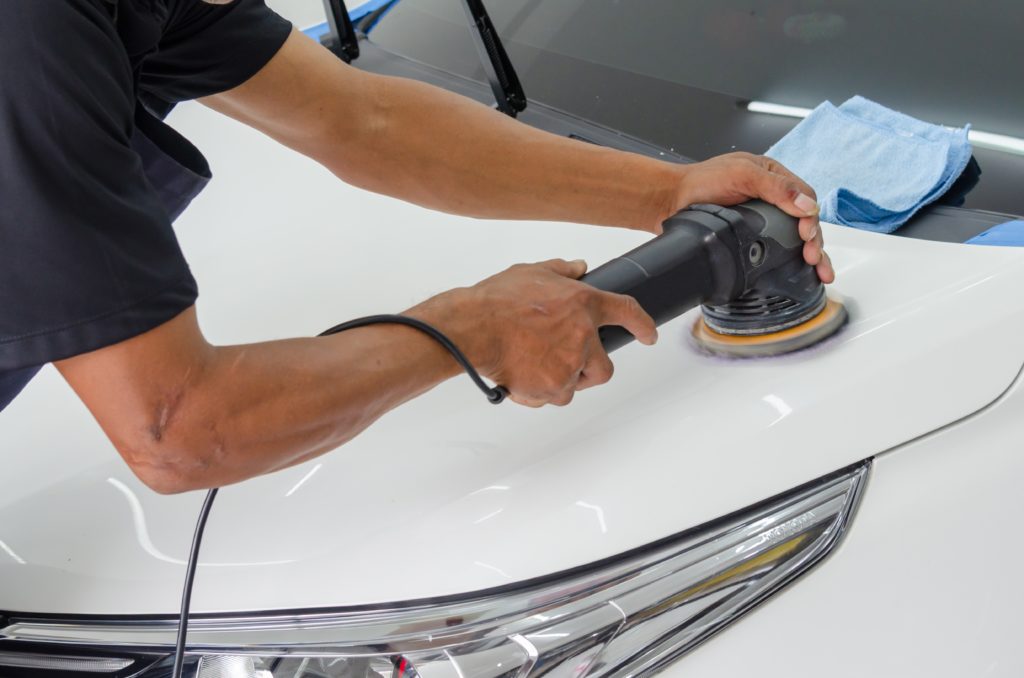
When we “cut,” we’re using an abrasive compound and a machine polisher to remove a microscopic layer of that clear coat. We aren’t trying to reach the paint; we’re just leveling the surface so the valleys of the scratches disappear.
How much are we taking off? Very little.
But this is where the amateur jobs go wrong. If you don’t use a paint thickness gauge to see how much “meat” is left on the bone, you risk burning through the clear coat entirely. Once that’s gone, it’s a trip to the panel shop for a respray. That’s why we take measurements before we even touch a pad to the surface. Not every scratch can be safely removed—if it’s through the clear coat and into the primer, “cutting” it further will only make things worse.
How Paint Correction Restores Deep Gloss
Once the surface is level (the “cut”), it usually looks a bit hazy.
This is where the refining, or the “polish,” comes in. If the cut is the heavy lifting, the polish is the fine art. We switch to a much finer, less abrasive liquid and a softer foam pad. This removes the microscopic marks left by the cutting stage and brings out that deep, mirror-like gloss.
This is why a car looks one way in a dark garage and another under the harsh Melbourne sun. Sunlight is unforgiving. It shows the “holograms” left behind by poor polishing techniques. A true professional finish looks perfect from every angle, under every light source.
What Causes Swirl Marks and Clear Coat Damage?
You’d be surprised how much damage happens when you’re trying to be “good” to your car.
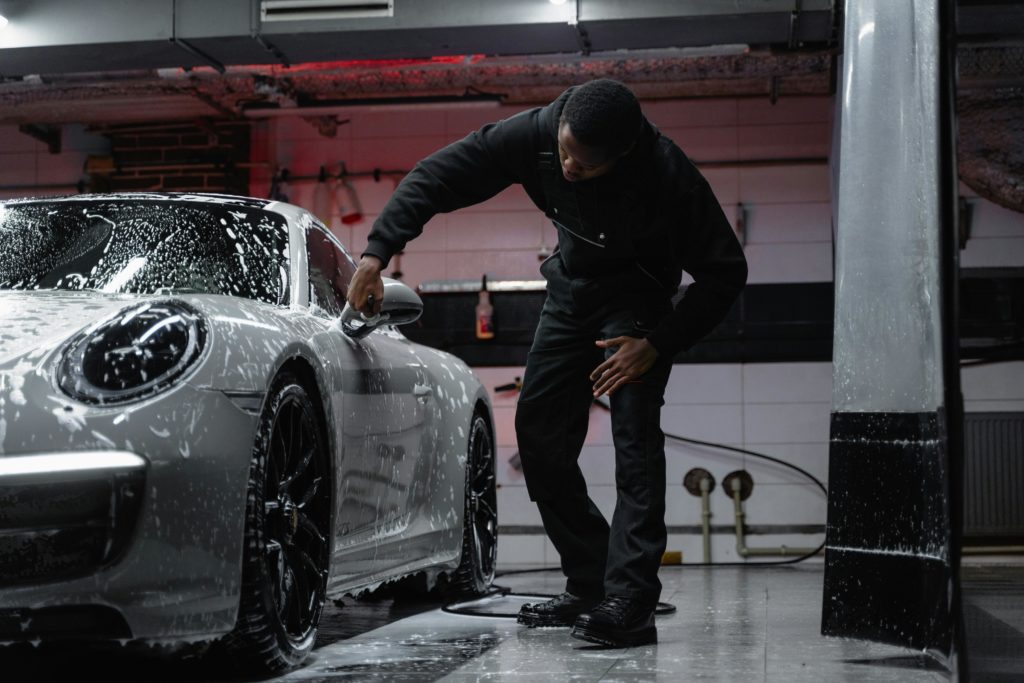
The biggest culprit? The automatic car wash. Those heavy bristles are essentially “slap-brushes” covered in the dirt and grit from the fifty cars that went through before you. They scour your clear coat, leaving behind those circular swirl marks.
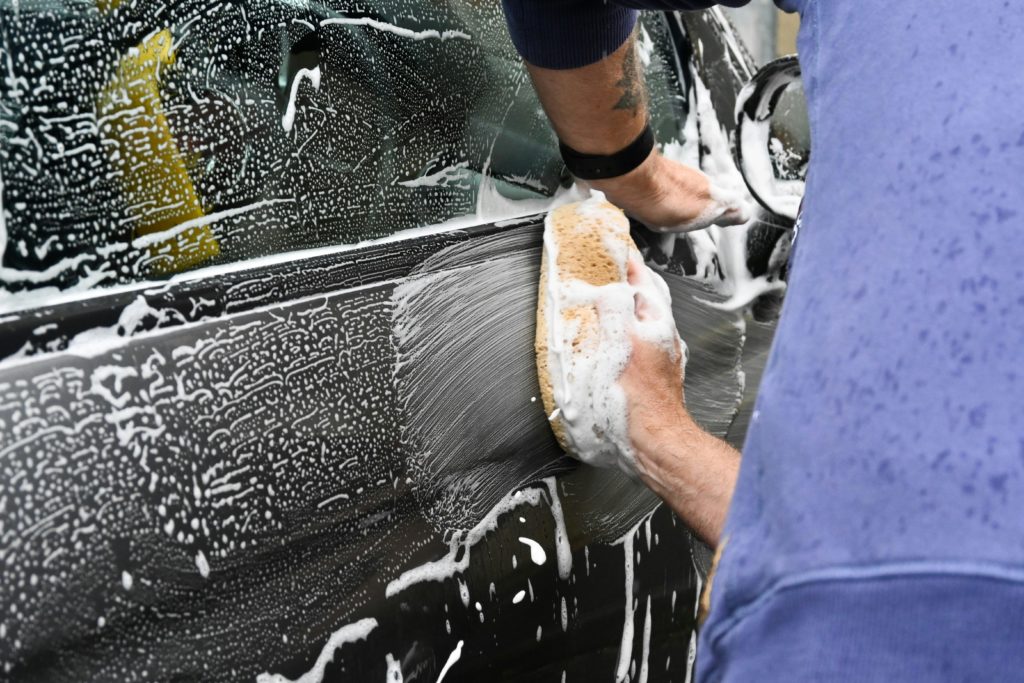
Even at home, a “clean” microfiber towel can be an enemy if it’s been dropped on the ground or washed with fabric softener (which ruins the fibres). Drying the car improperly is another big one. Water spots can actually etch into the clear coat if left to bake in the sun, creating permanent craters that require a full detail with cut and polish to fix.
The Transformation: Beyond Just Being Shiny
The visual change after a proper correction is hard to describe until you see it in person. On metallic paint, the “flake”—those little sparkles in the paint—suddenly pops. It looks like it’s floating in deep water. Reflections become sharp. Instead of seeing a blurry shape of a tree in your car door, you see the individual leaves.
But it’s not just about the ego boost. A corrected surface is physically smoother. If you were to run a piece of cellophane over a scratched car, it would snag and drag. On a polished car, it slides. This smoothness means dirt and road grime have nothing to “grip” onto. Your future maintenance washes become twice as fast because the water just sheets off.
From a value perspective, it’s a no-brainer. If you’re listing a car on Marketplace or getting it ready for a private sale in the South East, a cut and polish can easily add thousands to the final price. People buy with their eyes. A car that looks “wet” and well-maintained signals to a buyer that the mechanicals were likely looked after too.
Why It Takes All Day (Or Longer)
We often get asked why a proper correction takes six, eight, or even twelve hours. Some “budget” shops claim they can do it in two. The difference is in the stages.
A two-hour job is usually a “wash and gloss,” where they use a product full of oils and fillers to hide the scratches temporarily. A real paint correction involves:
- A multi-stage decontamination wash (removing iron fallout and tar).
- Clay bar treatment to pull embedded grit out of the pores of the paint.
- Taping off all plastic trim and rubber seals so they don’t get stained or damaged.
- Multiple passes with different machine/pad/liquid combinations.
European cars, like BMWs or Audis, often have “hard” clear coats that require more time and more aggressive techniques to level. Conversely, some Japanese makes have “soft” paint that is incredibly finicky to finish without leaving streaks. You can’t rush physics.
Cut and Polish Myths: What Paint Correction Can and Cannot Fix
One of the most persistent myths is that a cut and polish is “bad” for your paint. If done correctly and sparingly, it’s the best thing you can do for it. It’s only bad if you’re doing it every six months or if the person behind the machine doesn’t know what they’re doing. You shouldn’t need a heavy cut every year—once the paint is corrected, your job is to maintain it with proper washing techniques so you don’t create new scratches.
Another one: “It will fix my stone chips.” Unfortunately, no. A cut and polish levels the clear coat around a defect. A stone chip is a physical hole where the paint is missing. Polishing will make the edges of the chip less sharp (making it less visible), but it won’t fill the hole.
The same goes for deep “key” scratches that you can feel with your fingernail. If the paint is gone, the paint is gone.
Is Your Car Suitable for a Cut and Polish?
Most cars benefit immensely from this service, but there are exceptions. If your clear coat is “failing”—look for white, flaky patches or a cloudy appearance that looks like skin peeling after a sunburn—a cut and polish won’t help. That’s a sign the clear coat has completely oxidised and given up. At that point, you’re looking at a respray.
Also, if you have a car with a matte or satin finish, put the polisher down. Polishing a matte car will turn it into a patchy, semi-gloss mess that looks like a mistake. Matte paint requires a completely different approach to cleaning and protection.
How to Maintain Your Paint After a Cut and Polish
After we finish a job and the client is staring at their reflection in the fender, the first question is always: “How do I keep it like this?”
The answer is simple but strict: stop using the local brush wash. Switch to a two-bucket wash method with a high-quality microfiber mitt. If you really want to lock in the results, this is the perfect time to talk about a ceramic coating. Since the paint is already perfectly level and clean, a coating will bond better and provide a hard, sacrificial layer that protects your newly polished finish from UV rays and light marring for years.
Conclusion
At the end of the day, paint correction is as much an art as it is a trade. It requires an eye for detail, an understanding of chemical reactions, and the patience to work one square foot at a time until it’s perfect. It’s the difference between a car that’s “clean” and a car that stops people in the parking lot.
Being a mobile service, we bring that level of workshop quality directly to your driveway or office in South Eastern Melbourne. We save you the hassle of losing your car for two days while providing a transformation that usually leaves our clients wondering why they didn’t call us sooner.
Ready to see what your paint actually looks like?
If your car is looking “tired” or you’re seeing those annoying spider-web scratches every time the sun hits the hood, it’s time for a professional assessment. We don’t just buff cars; we restore them. Contact Ryan’s Mobile Car Detailing today to book a paint inspection or to schedule your transformation. Let’s get that “new car” feeling back in your driveway.